The Book That Pulled Me Back Into DOOM’s Engine Room
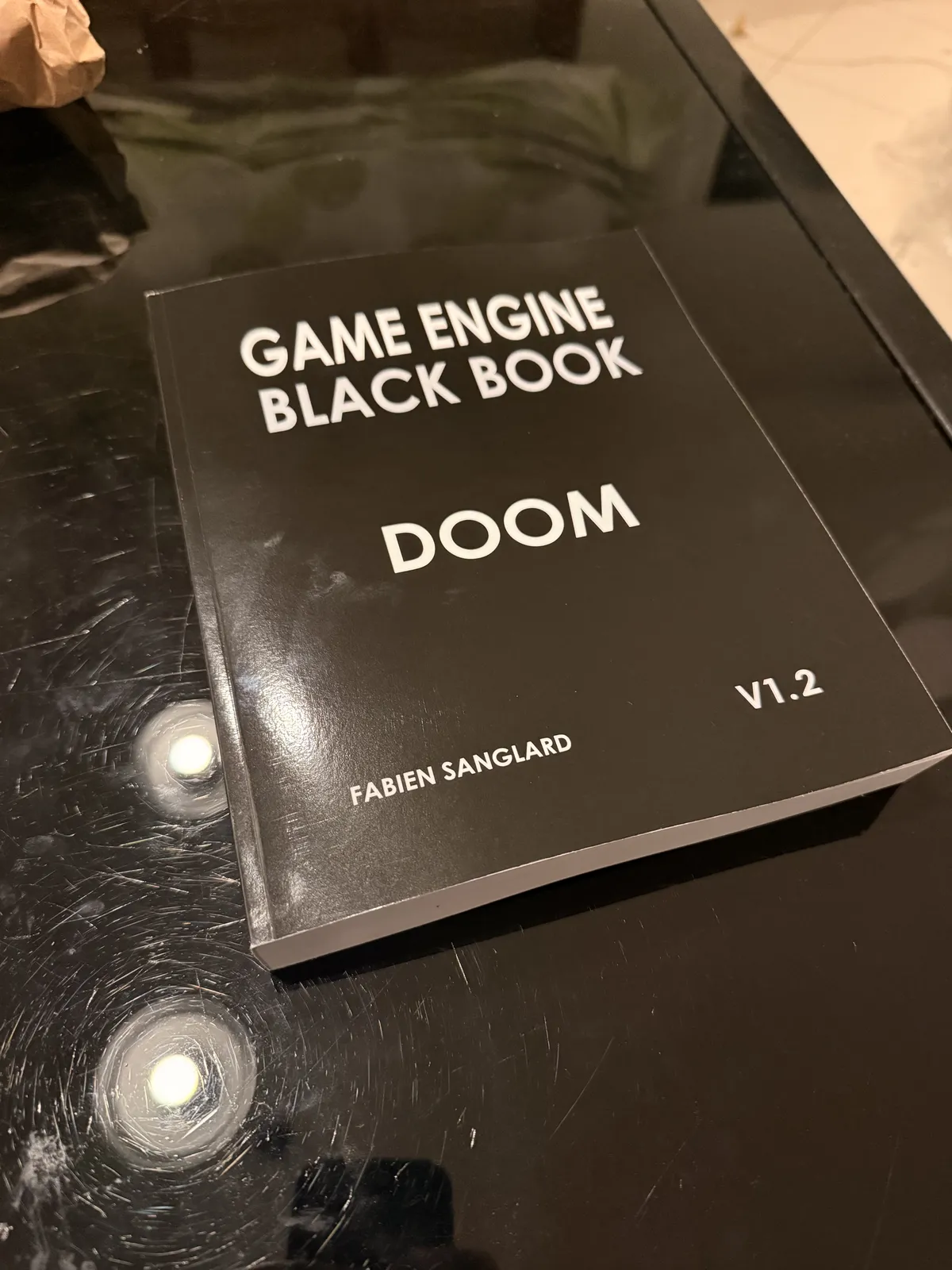
Why I Bought the Game Engine Black Book: DOOM
I recently picked up Fabien Sanglard’s Game Engine Black Book: DOOM.
Not as a collector’s item, not as a coffee-table trophy, but because DOOM has always been an unfinished chapter for me.
It was the second game I ever fell in love with.
The first one was Wolfenstein 3D, which ran fine on my old 486 (yes, IBM PS/2). DOOM didn’t. I would launch it, stare at a frozen screen, and realize the hardware simply wasn’t enough. So I played DOOM at friends’ houses, glued to the monitor, half jealous and half hypnotized.
That feeling never really faded.
Why This Book Matters
What makes the book valuable is that it doesn’t treat DOOM as a cultural milestone; it treats it as a machine.
It opens the motor and shows you everything:
- sectors
- visplanes
- BSP trees
- vertical column rendering
- memory constraints
- asset layout
- hardware bottlenecks
It’s full of diagrams, timing breakdowns, load maps, and architectural notes.
It reminds you constantly that the 486 was not “slow” by today’s standards—
it was slow even by its own standards.
And understanding how Carmack and Romero worked around those limitations is the real lesson.
How It Applies to My Current Engine Project
I’ve been building a small 2.5D engine in my spare time.
Not a DOOM clone, not a remake—my own engine, from scratch, with my own pipeline and structure. I’m using C# with OpenGL (through Silk.NET). Vulkan is on the horizon, but right now it would add complexity without giving me useful leverage.
Studying DOOM helps not because I want to replicate it, but because I want to understand how Carmack thought: what he optimized, what he ignored, and why he drew the line where he did.
Rebuilding an engine from zero forces you to confront every design decision:
- What does the renderer actually need?
- What should live in the game logic vs the engine core?
- How do you organize data for cache efficiency?
- How do you minimize overdraw?
- How much abstraction is too much abstraction?
DOOM answers all of these questions in simple, brutal ways.
Why Looking Back Is Still Relevant
The hardware of the early 90s wasn’t forgiving.
If you wasted cycles, you lost the frame. End of story.
Going through DOOM’s architecture teaches you discipline:
- simplify instead of complicate
- design for predictable memory access
- avoid unnecessary passes
- keep data compact
- let the constraints guide the architecture
It’s the opposite of modern “add another layer” development.
It forces you to be honest with your design.
In Conclusion
The Game Engine Black Book: DOOM is not a relaxing read.
It’s a technical disassembly of a legendary engine, and that’s exactly why it’s worth it.
It’s a bridge between past and present.
A reminder that great engines aren’t made by brute force hardware—they’re made by clarity of thought, smart constraints, and clean data.
Reading it makes you want to open your editor and start fresh.
Not out of nostalgia, but out of respect for the engineering mindset that shaped an entire generation of games.